



Crossover alloys are taking the market by storm: At the Montanuniversität Leoben, a novel concept for aluminium alloys has been developed that resolves a long-standing trade-off in materials engineering: until now, aluminium materials were either easy to work with or particularly strong. These so-called crossover alloys now combine both properties in a single material.
Conventional 5xxx-series aluminium-magnesium alloys are easy to form and corrosion-resistant, but achieve only limited strength. High-strength 7xxx-series alloys, on the other hand, are significantly more difficult to process. The crossover concept developed in Leoben deliberately transcends these previously rigid class boundaries, thereby opening up new material combinations. “We haven’t simply developed a better 5xxx or a better 7xxx alloy. We asked why this boundary needs to exist at all,” explains Professor Stefan Pogatscher from the Chair of Non-Ferrous Metallurgy at the Montanuniversität Leoben. “The T-phase makes all the difference.”
The key to the performance of the new alloys lies in what is known as the T-phase. The targeted combination of magnesium, zinc and, in some cases, copper results in materials that are initially easy to form. It is only through a final heat treatment that they develop high strengths which can rival those of classic 7xxx-series alloys. A particularly efficient aspect is that the necessary hardening can be integrated into existing industrial processes, such as the paint curing process in the automotive industry. This means that no additional energy-intensive process steps are required.
From the Christian Doppler Laboratory to production
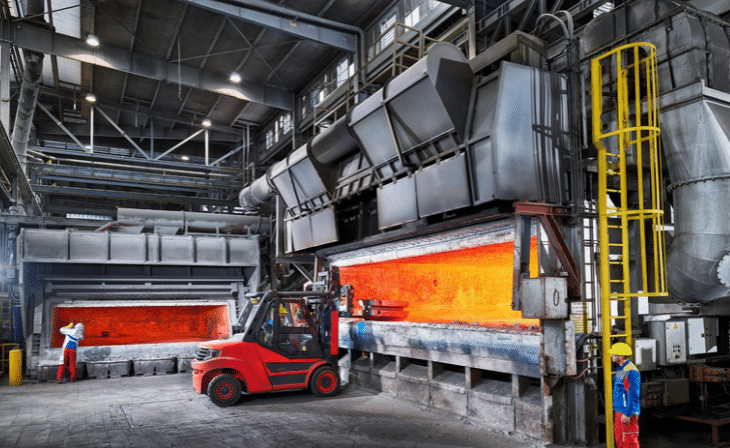
The development of the crossover alloys began at the Montanuniversität Leoben and was, from the outset, a key focus of the Christian Doppler Laboratory for Advanced Aluminium Alloys. Together with the corporate partner AMAG Austria Metall AG, one of Europe’s largest single-site aluminium recyclers, work was carried out to transfer the concept from initial laboratory samples to industrial production. What began as laboratory samples weighing around 100 grams gradually developed into larger test batches, industrial production trials at the AMAG plant in Ranshofen and, finally, prototype components. Today, the innovation – AMAG CrossAlloy®57 – is already commercially available. “Scientific validation is important. However, the decisive step is when an idea becomes a material that can be produced industrially.”
Lightweight construction, recycling and new fields of application
Crossover alloys can enable components that are both lighter and more resilient. This is of particular interest for the transport sector, but also for applications in industry, rail, robotics, defence and space travel. At the same time, they can strengthen the circular economy: as fewer different materials are required in a single component, recycling is made easier. The alloys were also specifically developed to accommodate higher proportions of recycled material. The materials from Leoben are also attracting interest in the aerospace sector. Research has shown that the T-phase exhibits exceptionally high radiation tolerance. These findings have raised the international profile of crossover alloys as potential materials for space applications.
With the new product website for AMAG CrossAlloy®, the family of materials developed in Leoben is now being marketed more extensively on the international stage. This transforms a scientific idea into a concrete Austrian industrial product with global application potential. Further information on AMAG CrossAlloy® is available at https://www.amag-al4u.com/en/products/crossalloy.
Further information:
Prof. Dr Stefan Pogatscher
Chair of Non-Ferrous Metallurgy
Email: stefan.pogatscher(at)unileoben.ac.at
Tel.: 03842 402 5228
[Source: Montanuniversität Leoben/News/de, 23 September 2026]